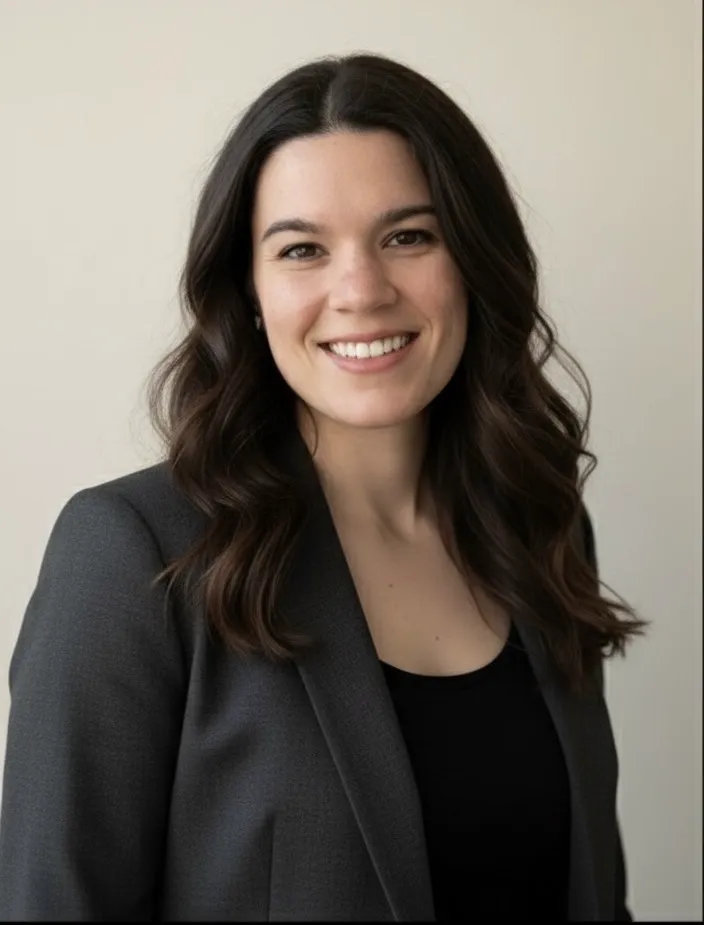
Bianca Avanzo
Independent Researcher
avanzorft.com
Root Frequency Theory did not begin as a theory. It began as a practice — sustained neurophenomenological observation, longitudinal self-tracking, and deep inner work, starting in December 2024. The observation came first. The framework followed the pattern.
The central question that emerged: how does a coherent sense of self maintain itself across time, and what exactly fails when it doesn't? Not at the level of diagnosis — at the level of mechanism, across biological, neural, and symbolic scales simultaneously.
That question produced four papers, a coherence metric, and an iOS app built to measure what no existing tool was measuring: cross-scale alignment in real time, in ecological conditions, outside the scanner.
Free Energy Principle — Friston's active inference framework provides the mechanistic backbone — fragmentation as increased variational free energy, coherence as prediction error minimization across interoceptive hierarchies.
Interoceptive predictive coding — Garfinkel & Seth's work on interoceptive accuracy and awareness grounds the measurement approach. The heartbeat detection task is drawn directly from Garfinkel et al. (2015).
Integrated Information Theory — Tononi's Φ as a formal proxy for cross-scale integration, adapted as the physiological coherence component of the metric.
Spatiotemporal neuroscience — Northoff's work on self-related processing and large-scale network dynamics — particularly the role of the DMN in maintaining narrative continuity across time.
Undergraduate training in integrated design, Universidade do Sagrado Coração (USC), Brazil. Longitudinal neurodevelopmental observation conducted informally through several years of caregiving work with children with special needs in the Bay Area — a context that provided sustained, ecologically valid access to regulatory dysregulation, interoceptive disruption, and the conditions under which self-continuity breaks down across development. That observational ground preceded and shaped the theoretical framework. No institutional affiliation — which has meant no IRB access, no neuroimaging equipment, no co-investigators. It has also meant no committee approval needed to ask the questions that matter, no external timeline, and no pressure to fit the theory to an existing lab's agenda. The framework was built from first principles, in the conditions of real life.
If this work resonates — or if you see a gap it might close — I'd like to hear from you.
Get in touch